Address
304 North Cardinal
St. Dorchester Center, MA 02124
Work Hours
Monday to Friday: 7AM - 7PM
Weekend: 10AM - 5PM
Address
304 North Cardinal
St. Dorchester Center, MA 02124
Work Hours
Monday to Friday: 7AM - 7PM
Weekend: 10AM - 5PM

Understand LCD specification status, interpret revision history, and connect documents, quotations and samples to the sourcing decision ahead.

A supplier sends a quotation with an LCD specification attached. The display appears relevant to the project, and the engineering team wants to evaluate a sample. Then someone notices “Preliminary” on the document.
Should sourcing pause until a Final specification is available? Can the team use the document for early evaluation? And if a newer file arrives, does it describe the configuration the supplier is actually offering?
These questions concern the relationship between the document, the proposed supply and the decision ahead.
A Preliminary specification is not inherently incorrect. It identifies information that should be treated as provisional within the issuer’s process. A Final designation also needs context: which configuration does it cover, what does its approval status mean, and how does it relate to the buyer’s requirements?
The useful starting point is to establish what the available evidence supports—and which uncertainties could change the next sourcing decision.
Consider an illustrative situation. Procurement receives a specification with a quotation, while engineering already has an earlier copy saved in the project folder. A sample then arrives with its own identification information.
Each item may be useful, but the team still needs to establish how they relate.
The quotation describes the commercial offer. The specification describes a product or configuration within a particular document scope. The sample gives the buyer something physical to evaluate. Agreement between these records needs to be established before their conclusions can be combined.
Differences can also arise within the documents themselves. One table may describe a typical value, while another gives a limit. A dimension may refer to the active display area rather than the complete assembly. A revised drawing may clarify an existing feature or document a physical change.
Before treating a difference as an error, buyers need to understand what is being described. This makes the sourcing conversation more precise: the question becomes whether the documents address the same property, configuration and conditions.
That precision matters because procurement and engineering may be making different decisions at the same time. Procurement may need enough information to compare offers. Engineering may need evidence for an enclosure, interface or operating requirement. A document can contribute to both discussions while leaving different questions unresolved.
These terms should be interpreted within the issuer’s document-control process. They should not be arranged into a universal sequence in which every document moves through the same stages.
A Preliminary specification can help buyers understand a proposed display and identify questions for further evaluation. Its status means that unresolved details should remain visible as assumptions.
The label alone does not reveal which details may change, when they may change, or whether every value is provisional in the same way. Those questions require the document’s notes, revision history and clarification from the responsible source.
For a buyer, the practical issue is the consequence of relying on a particular detail. A provisional value used to explore an option creates a different commitment from the same value used to freeze a design or approve purchasing.
A document marked Final carries that designation from its issuer. Buyers still need to understand its scope and the configuration it describes.
The label should not be expanded into an assurance that the document applies to every variant, that the offered stock matches it, or that the display has been approved for the buyer’s application.
It is reasonable to ask how the issuer identifies the applicable version and how the supplier connects that version to the quotation and sample. These questions establish the context needed to use the document.
Release language can describe the issuing of a document, including a preliminary document. For example, TOPWAY’s official documentation places a Preliminary description alongside a Release Date.
A release date therefore cannot establish final maturity on its own. Equally, the absence of the literal word “Final” is not enough to determine a document’s authority or intended use.
Buyers should consider the source, stated status, revision identification and applicability together. When the meaning remains unclear, clarification is more useful than assigning a maturity level from one word on the cover.
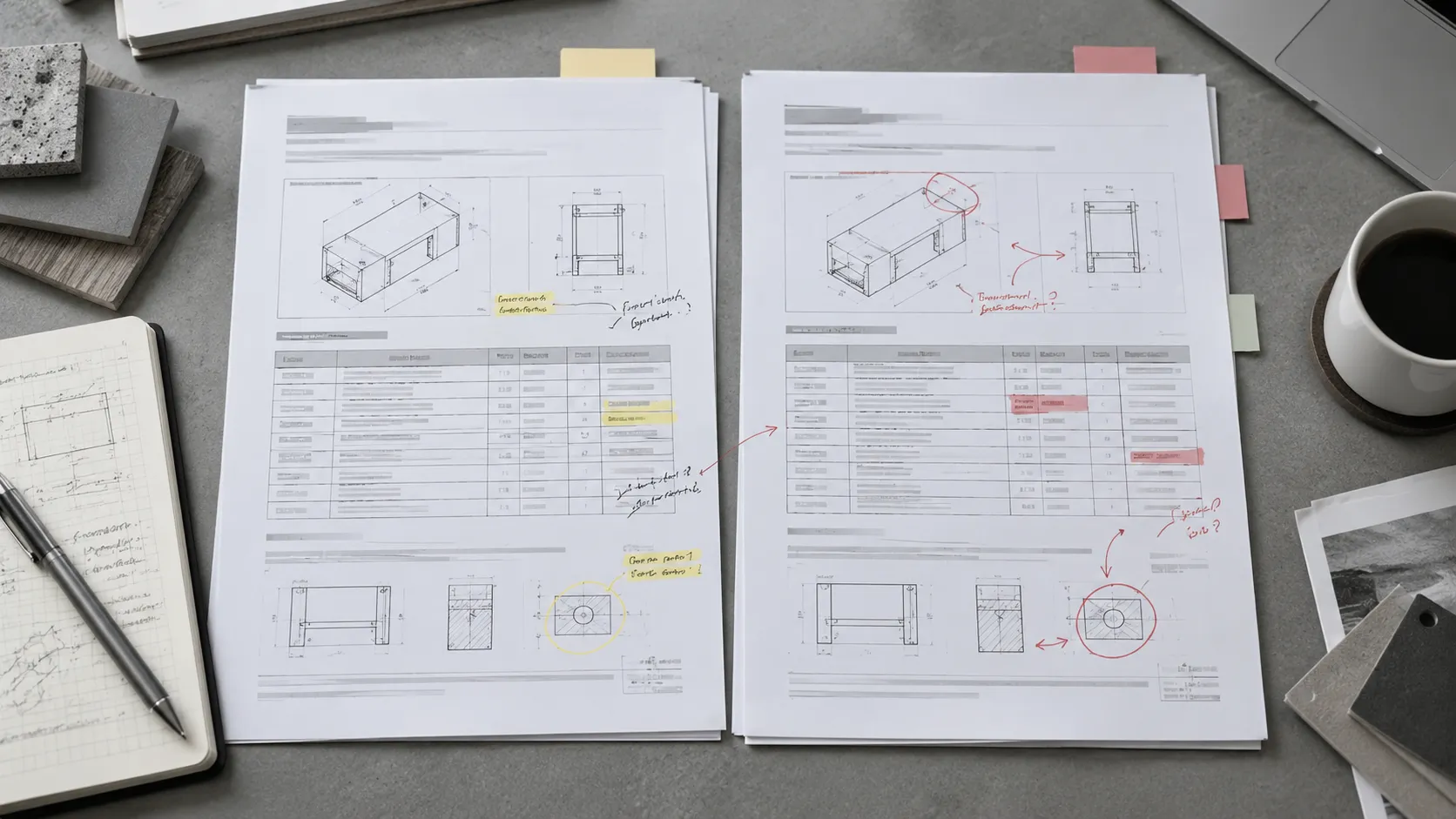
Revision history helps buyers understand why a document differs from an earlier copy. Its value lies in the description of the change, rather than the revision number alone.
A revision entry may describe a drawing-format update. Another may describe changed electrical information or a product revision. Those entries raise different questions about whether earlier project assumptions still hold.
Document revision and product revision also need separate interpretation. The code identifying a specification update may belong to a different numbering system from the code identifying the physical product. Similar-looking codes should not be assumed to mean the same thing.
A later date establishes chronology. It does not, by itself, establish which configuration is being supplied. Older and newer documents need to be connected to their intended products and the actual offer.
A revision history is also a starting point for understanding change, rather than proof that every relevant detail has been captured in its summary. Where an entry is too brief to explain an important difference, the supplier or document issuer needs to clarify it.
When the evidence points to a product change, Vernon’s guide to LCD revision-change revalidation develops the next question: which buyer-side dependencies should be reassessed? This article focuses on establishing the specification basis before that assessment.
The same document can be useful at several stages of sourcing, but the commitments made at those stages differ.
During initial screening, buyers are trying to decide whether an option deserves further attention. A provisional document may contribute to that discussion when its limitations are understood. The team can identify the requirements that appear relevant and the assumptions that still need support.
Sample evaluation brings a different question: what configuration is being evaluated, and what does the evaluation need to establish? The sample, its identification and the applicable documents need to be connected so that the results remain meaningful.
Before a purchasing commitment, unresolved questions about a critical requirement deserve particular attention. Buyers need a clear basis for the configuration being ordered and the acceptance conditions attached to that decision.
This is a way of thinking about evidence, rather than a rule that automatically approves one document status and rejects another.
One useful question is:
If this unresolved detail changes, would it change the decision we are about to make?
An uncertainty about a requirement central to the design may deserve clarification before further commitment. Another uncertainty may remain manageable during an exploratory evaluation, provided the buyer records the assumption and understands its consequences.
Moving too quickly can turn a provisional detail into an unnoticed design assumption. Waiting for a preferred label without investigating its meaning can also leave the actual sourcing question unanswered. Progress depends on resolving the uncertainties that matter to the decision.
Even when document identity is clear, buyers need to preserve the meaning of the information they compare.
Typical, minimum and maximum values answer different questions. Conditions attached to a value help define the circumstances in which it is stated. A number copied into a quotation summary may lose that context.
The same applies to physical and functional scope. Information about a panel, a complete module or a larger assembly should be interpreted according to the object described. A familiar parameter name does not establish that two documents measure the same property.
The buyer’s task is to connect the relevant requirement to the appropriate information. Where that connection is unclear, the comparison remains incomplete.
This approach also helps teams discuss differences constructively. Instead of asking which number is “right” before understanding either one, they can establish whether the values share the same definition and basis.
The following questions help keep the evidence connected to the decision. They support discussion; they do not provide an automatic approval result.
| Decision stage | What the evidence should help establish | What remains important |
|---|---|---|
| Initial screening | Whether the display direction merits further evaluation | Provisional details remain explicit assumptions |
| Sample evaluation | Which configuration is being tested and which requirements the evaluation addresses | Results stay tied to the identified sample and conditions |
| Purchasing commitment | The applicable specification basis, ordered configuration and acceptance requirements | Critical unresolved differences receive a clear disposition before approval |
The distinction is useful even when the document carries a Final designation. Document status contributes to the evidence, while configuration identity and application requirements determine how that evidence can be used.
Likewise, a successful sample evaluation supports conclusions within its scope. It should not silently become a guarantee about every future delivery. Keeping the evaluated configuration and conditions identifiable preserves the value of the result.
Ask for the complete document, including its identification, status and revision information. Keep any requirement that depends on missing context unresolved until the relevant pages and notes are available for review.
Retain the version used for the original review and save the newer file separately. Record which document informed each decision, then clarify whether the update applies to the quoted or evaluated configuration before changing that basis.
Ask the supplier to explain the difference and identify the configuration covered by the offer. Establish whether both entries describe the same property and conditions. Keep the discrepancy visible until the applicable requirement is clarified.
Vernon is a trading company and China sourcing partner supporting overseas B2B display buyers with requirement clarification, sourcing communication, and supplier coordination. For a specification review, share the document revision, quoted configuration and the requirement that still needs clarification.

About the Author
General Manager, Vernon
Saiva is the General Manager of Vernon, a trading company and China sourcing partner supporting overseas B2B display buyers. She supports requirement clarification, supplier coordination, and sourcing communication for LCD display projects.
A Preliminary specification can be a useful part of sourcing. Its provisional status needs to remain visible wherever the buyer relies on it.
A Final or released document deserves the same attention to identity and applicability. The decision becomes clearer when the file, quotation, sample and critical requirements describe a coherent basis for moving forward.
General guidance cannot determine whether a particular document covers your offer or whether an unresolved difference matters to your project. That depends on the file, the proposed configuration and the requirement you need to satisfy.
If those connections remain unclear, share your sourcing question with Vernon, including the document revision, quoted configuration and the requirement affected by the uncertainty. A focused question gives the sourcing discussion a clear purpose: establishing which evidence is needed for your next decision.