Address
Kebao Creative Park Phase 2, Dashi Town, Panyu District, Guangzhou, China

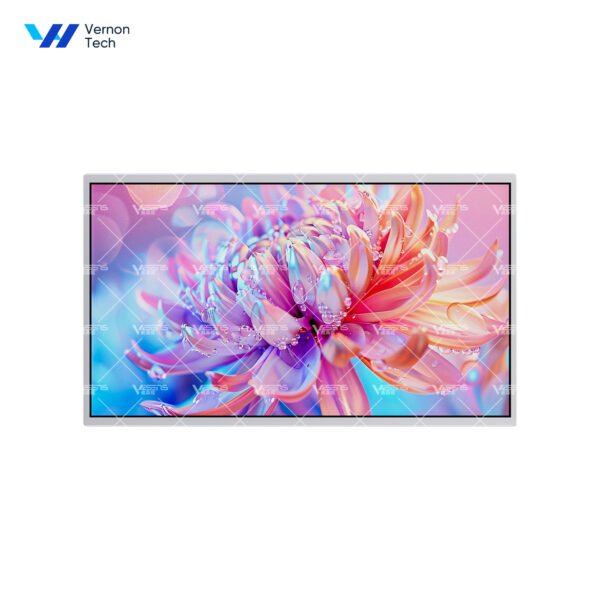
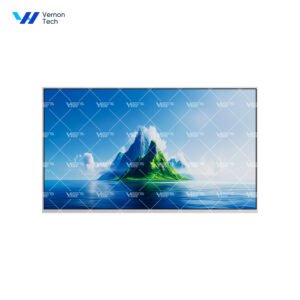
M270HVN02.0 27 Inch FHD LCD Module
M270HVN02.0 is a 27 inch FHD LCD module built on the M270HVN02.0 open-cell base panel, with a VA Mode, Normally Black display mode and a dual-channel LVDS interface, supplied through Vernon as a China sourcing partner. Backlight and brightness are configured per project; request the current specification, sample and quotation before design-in.
27 Inch FHD LCD Module
M270HVN02.0 is a 27 inch FHD 1920×1080 LCD module supplied through Vernon, built on an open-cell base panel with a VA Mode, Normally Black display mode and a dual-channel LVDS interface. The base panel figures on this page come from the currently registered specification; backlight, brightness and assembled-module figures are configured per project and confirmed before quotation.
27″Display size
1920×1080FHD resolution
VA ModeDisplay mode
LVDSSignal interface
Base Panel Specifications
The table below lists the base panel figures recorded in the currently registered specification. They describe the panel itself, not the assembled module: brightness, contrast, viewing angle, colour gamut, module outline and thickness, module weight and total module power belong to the backlight and mechanical build your project selects, and are confirmed per configuration. On mobile, swipe the table sideways to read each value.
| Model | M270HVN02.0 |
|---|---|
| Size | 27 inch |
| Resolution | 1920 x 1080 |
| Resolution Class | FHD (1080p) |
| Panel Type | a-Si TFT-LCD |
| Display Mode | VA Mode, Normally Black |
| Form (base panel) | Open Cell |
| Pixel Pitch | 311.25 (H) x 311.25 (V) µm |
| Display Colors | 16.7M (RGB 8-bit) |
| Response Time | 7 ms rise / 5 ms fall (12 ms on/off typical) |
| Surface Treatment | Anti-Glare, 3H |
| Interface | Dual channel LVDS, 30-pin |
| Nominal Input Voltage | 5 V (Typ., VDD) |
| Base Panel Power (VDD line) | 5.1 W (Typ., all-white pattern at 60 Hz); 6.05 W (Typ., all-white pattern at 75 Hz) |
| Base Panel Weight | 630 g (Typ.) |
| Operating Temperature | 0 to +50 °C |
| Storage Temperature | -20 to +60 °C |
| Cell Transmittance | 3.25% (Typ.) / 2.76% (Min.), measured with LED backlight, without DBEF-D |
Specifications are based on the referenced datasheet for the M270HVN02 series and are subject to revision verification; please verify the latest revision before design-in. The figures describe the base panel, not the assembled module. Active area and cell outline are defined in the base panel drawing; request the current drawing for the values that apply to your build. Fields that depend on the selected backlight and mechanical build — absolute brightness, contrast ratio, viewing angle, colour gamut, module outline and thickness, module weight, total module power, connector arrangement and compliance — are confirmed for the configuration you order and are not stated on this page.
Custom Backlight Options
Vernon can source backlit LCD module configurations built on the M270HVN02.0 base panel, with brightness options from 300 to 1000 nits depending on project requirements. Final brightness, power consumption, dimensions and thermal performance are subject to configuration and engineering confirmation.
These are configured builds, not a catalogue of fixed part numbers. A brightness level inside that range is a project requirement that is engineered, sampled and confirmed for your configuration; it is not a fixed catalogue value for this model. Requested brightness is confirmed against the backlight solution, the driving and power arrangement, the mechanical envelope and the thermal design of the finished module, and different targets can be met by different builds rather than by one hardware setting.
The base panel figures published on this page remain the reference for the panel itself. Anything that belongs to the assembled module — optical output, total power, outer dimensions, module weight and the finished connector arrangement — is confirmed for the configuration you order and is stated in the specification issued for that configuration.
Backlight Configuration Evaluation
Backlight configuration is where most of the engineering work sits for a project like this, so it is worth stating the requirement explicitly rather than selecting a number from a page. Send the following with your inquiry and the configuration can be reviewed as a build instead of a catalogue lookup:
- Target brightness and basis — the level you need, the unit it is quoted in, and whether it is a minimum, a typical or a design target. That determines how much headroom the backlight solution needs.
- Optical expectations — the contrast, viewing angle and colour performance your application has to reach once the module is assembled and the panel is lit.
- Power and driving — the rail and power budget available in your system, and whether the backlight driver is supplied with the module or provided by your own design.
- Mechanical envelope — the depth, mounting direction and clearance available for the backlight stack, the light guide, the frame and any heat spreading.
- Thermal conditions — ambient temperature, duty cycle, enclosure airflow and expected service life, since higher brightness changes the thermal load of the finished module.
- Quantity and schedule — so the build can be reviewed for sampling and for the volume you actually need.
Vernon will confirm what can be supported for the requested configuration. A brightness figure is settled only once it is stated in the specification issued for the configuration you order; until then it should be treated as a requirement under review rather than as a published specification.
Applications & Buyer Fit
Start with M270HVN02.0 when your requirement is this exact base panel, or when you need a 27 inch FHD display built up into a backlit module with an optical output matched to a specific project. Vernon is a China sourcing partner for LCD and TFT-LCD display procurement, so the evaluation on this page separates what the panel is from what the finished configuration will do.
The four evaluation paths buyers use most often with this model:
- Exact-model sourcing — the M270HVN02.0 panel is already on your drawing, label or approved vendor list and you need a supply route for that same model identity.
- Backlit module configuration — you need this panel supplied as a lit module at a defined brightness, and the backlight, power, mechanical and thermal build has to be set for your project.
- Existing display replacement evaluation — send the model you are replacing together with a label photo and the current specification so the mechanical, electrical and optical requirements can be compared. The same size or resolution alone is not treated as confirmation of replacement compatibility.
- Controller and enclosure review — confirm the signal interface, cable definition, backlight arrangement, power supply and the space available in the enclosure before a sample is approved.
This page does not state that M270HVN02.0 is proven for a particular end product or industry. Suitability has to be confirmed against your own design, with the specification issued for your configuration as the reference for that review.
Interface & Integration Notes
The current specification records a dual channel LVDS interface with a 30-pin signal connector for the base panel. An interface name on its own does not establish electrical compatibility, so work through the following points against the revision and the configuration you intend to order.
- Signal interface — match the recorded interface with the controller or embedded mainboard you are using, and confirm the data format and bit depth your design expects.
- Connector and pin assignment — request the connector part, pin assignment and mating connector for the build being quoted. A matching pin count on its own is not proof of compatibility.
- Controller timing — check the timing, clock range and frame-rate settings recorded for that revision against your controller configuration, and confirm whether the frame rate you need sits inside the supported range.
- Optical build — brightness, contrast and viewing angle depend on the backlight, optical films and driving arrangement of the finished module, not on the panel alone. State the level you need, the unit and the measurement basis so the configuration can be reviewed.
- Mechanical arrangement — check the active area, mounting direction and enclosure clearance against your design. The module outline and thickness are configuration-specific, so take them from the drawing issued for your build rather than from this page.
- Power and start-up sequence — confirm the supply rail, the total module power and the power-on/off sequence required by the configuration you order.
Request the current specification and record the revision and label marking of the parts you receive before sample approval or production release.
Alternative Sourcing Options
No related model is published on this page for M270HVN02.0, because a similar size class or resolution is not by itself confirmation of compatibility. Send the details below and Vernon will review sourcing options with you:
- Exact model and, where available, a label photo
- Current datasheet or specification
- Required size, resolution and interface
- Mechanical constraints, mounting direction and the backlight requirement you need
M270HVN02.0 Buyer FAQ
What does the downloadable datasheet cover?
The download button at the top of this page opens the registered base panel specification for the M270HVN02 series, which covers M270HVN02.0. It documents the panel: size, resolution, display mode, interface, panel power and panel weight. It does not document a specific backlit module build, and it does not certify a particular brightness, module outline or module power figure. Those are confirmed in the specification issued for the configuration you order, and the revision you receive should be checked against the document you hold.
Can the brightness be specified for my project?
Yes. Vernon can source backlit configurations built on this panel with brightness options from 300 to 1000 nits depending on project requirements. The level you need is treated as a configuration requirement: it is engineered and confirmed against the backlight solution, the power and driving arrangement, the mechanical envelope and the thermal design, and it is settled in the specification for the build you order. It is not a fixed catalogue value for the panel.
Why is there no single brightness or module weight figure on this page?
Because those values belong to the assembled module rather than to the panel, and they change with the backlight and mechanical build. Publishing one number would suggest every configuration performs the same way, which is not how a configured backlit module works. Request the current specification for your configuration and the relevant figures are confirmed there.
What information should be provided for a quotation?
Send the exact model, the quantity, the destination market and your target schedule, together with the configuration details that matter to your design: target brightness and basis, interface, mechanical constraints and mounting direction, the power budget available in your system, and whether you need a sample. A label photo and the current specification help the review move faster.
What should be verified before design-in?
Confirm the revision and the configuration you are ordering, the active area and the module outline drawing issued for that build, the interface and connector definition, timing, the total module power and the complete backlight arrangement. Then run a sample in your own system and record the result — brightness, thermals and mechanical fit — before final approval. Sourcing an exact model does not by itself establish drop-in compatibility.
Send Your M270HVN02.0 Inquiry
Share your quantity, destination market and schedule, and say whether you need the current specification, a sample or a quotation. For a backlit module build, include the brightness target and its basis, the interface and mechanical constraints, and the power budget available in your system so the configuration can be reviewed against your requirements.
Send Inquiry
Please send your inquiry for M270HVN02.0 using the form below. Our team can help confirm the current specification, sample availability, and the backlight, interface, power and mechanical requirements for the configuration you are evaluating.