Address
Kebao Creative Park Phase 2, Dashi Town, Panyu District, Guangzhou, China

LCD Display Solutions for Shared Power Bank Advertising Kiosks: 21.5-Inch and 32-Inch Options
Compare 21.5-inch and 32-inch shared power bank advertising display options for cabinet fit, content impact and supply scope before requesting a configuration-specific quote.

Quick Answer
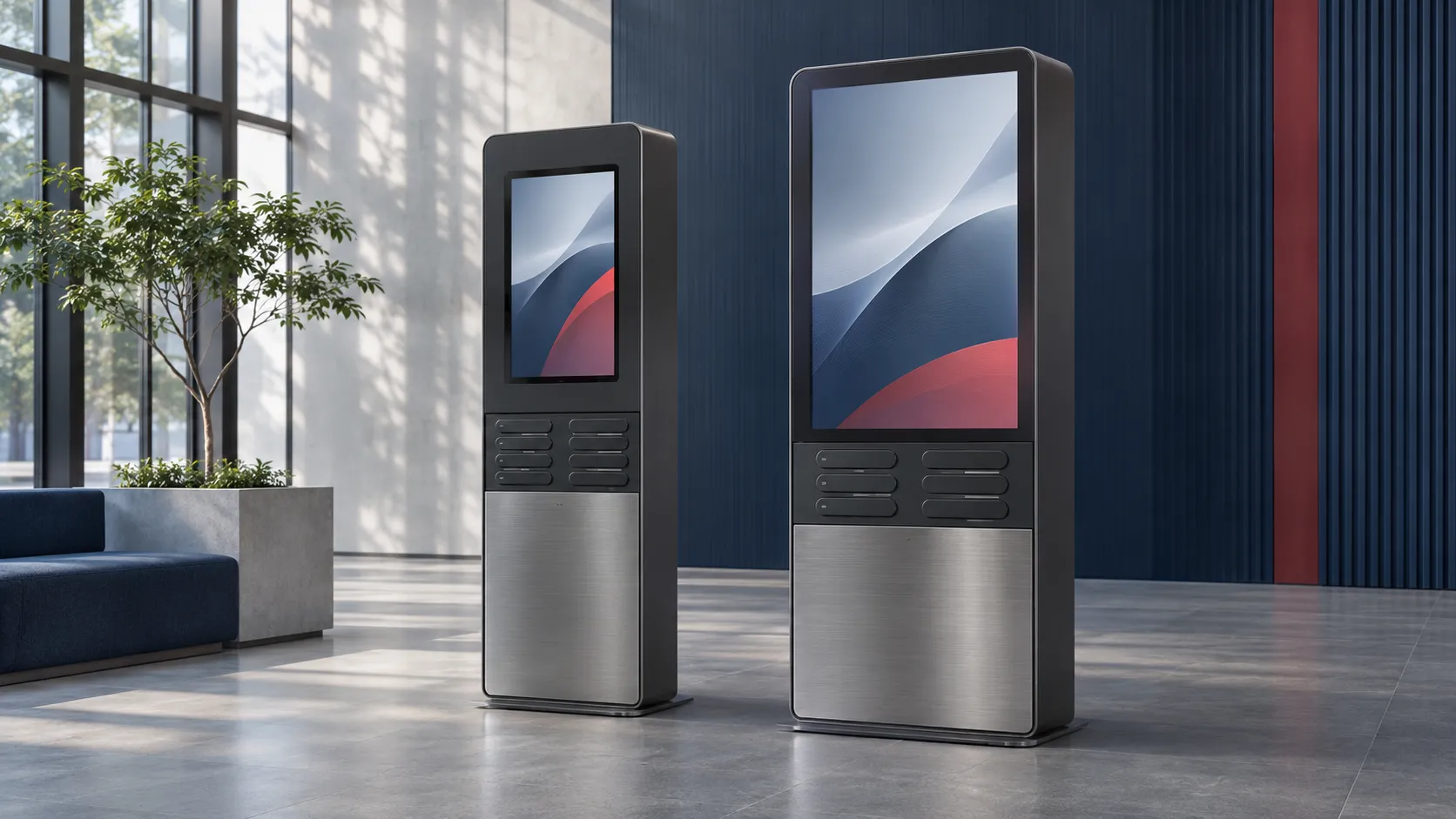
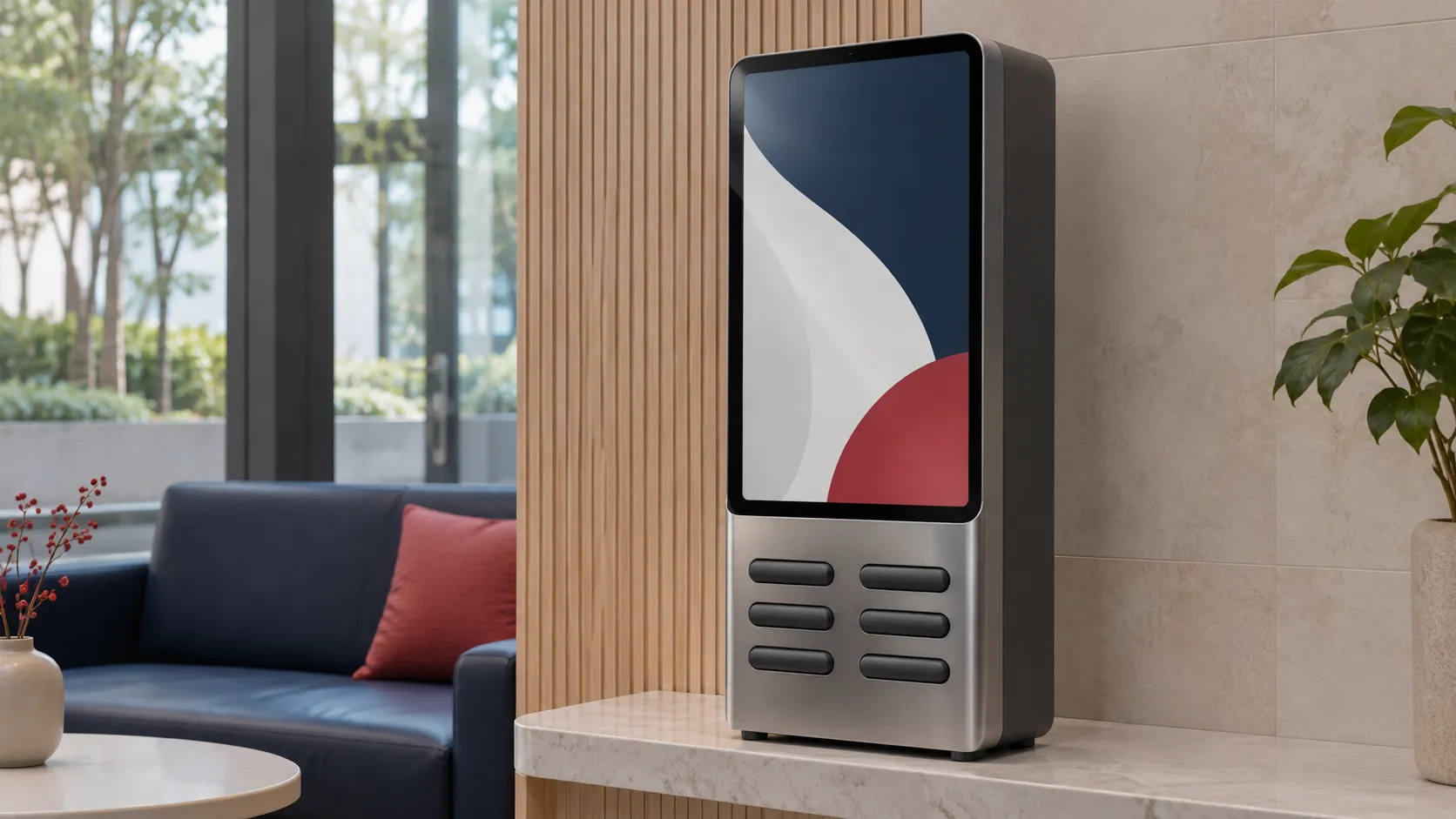
For a shared power bank advertising kiosk, evaluate 21.5-inch when a compact cabinet and close viewing take priority. Evaluate 32-inch when a larger advertising face is the priority and the enclosure has room for the complete assembly. Select the direction that serves the content and installation, then request a quotation for an explicitly defined base display, OEM backlit module or third-party backlit assembly. The size is a selection direction; fit and finished-display performance still depend on the quoted configuration and sample.
Start with the cabinet and the advertising job
The display shares space with the charging bays, power electronics and service access. A larger advertising face is useful only if the cabinet can accommodate the complete assembly and the content remains readable where people will see it. Reserving space for the visible screen alone leaves mounting, cable exits and service clearance unresolved.
The commercial choice is how much of the cabinet to devote to advertising while retaining the charging bays and service access the terminal needs. Evaluate 21.5-inch where a compact display face fits that balance. Evaluate 32-inch where the larger canvas supports the intended advertising layout and the installation can accommodate it. More screen area is useful when the content benefits from it; size alone is no evidence of greater engagement or advertising revenue.
21.5-inch or 32-inch: decide what the extra area buys
At the same resolution, 21.5-inch concentrates the pixels into a smaller face, which can favor close reading of text and rental instructions. A 32-inch screen gives appropriately scaled graphics and type a larger physical presence. Choose between those benefits using the intended advertising layout and viewing positions: a larger diagonal alone neither adds detail nor establishes readability.
| Decision | 21.5-inch direction | 32-inch direction |
|---|---|---|
| Cabinet priority | Prioritize a compact advertising face where cabinet footprint, charging bays and service access compete for space. | Prioritize a larger advertising face where the enclosure and installation space can accommodate the complete assembly. |
| Content priority | Emphasize close reading of rental instructions, text and compact advertising layouts. | Emphasize larger graphics and type for the intended approach distance, subject to a content trial. |
| Resolution | Specify the required resolution in the RFQ; do not infer it from size. | Use the same content sample to assess whether the proposed resolution is sufficient. |
| Mechanical decision | Obtain the assembly drawing, including brackets, connector and cable clearance. | Check the same drawing details; do not scale the smaller unit’s mounting plan. |
| Selection outcome | A 21.5-inch direction when compactness and close viewing lead; request a configuration-specific quote. | A 32-inch direction when advertising area leads and enclosure space permits; request a configuration-specific quote. |
Buy a defined configuration, not just a panel number
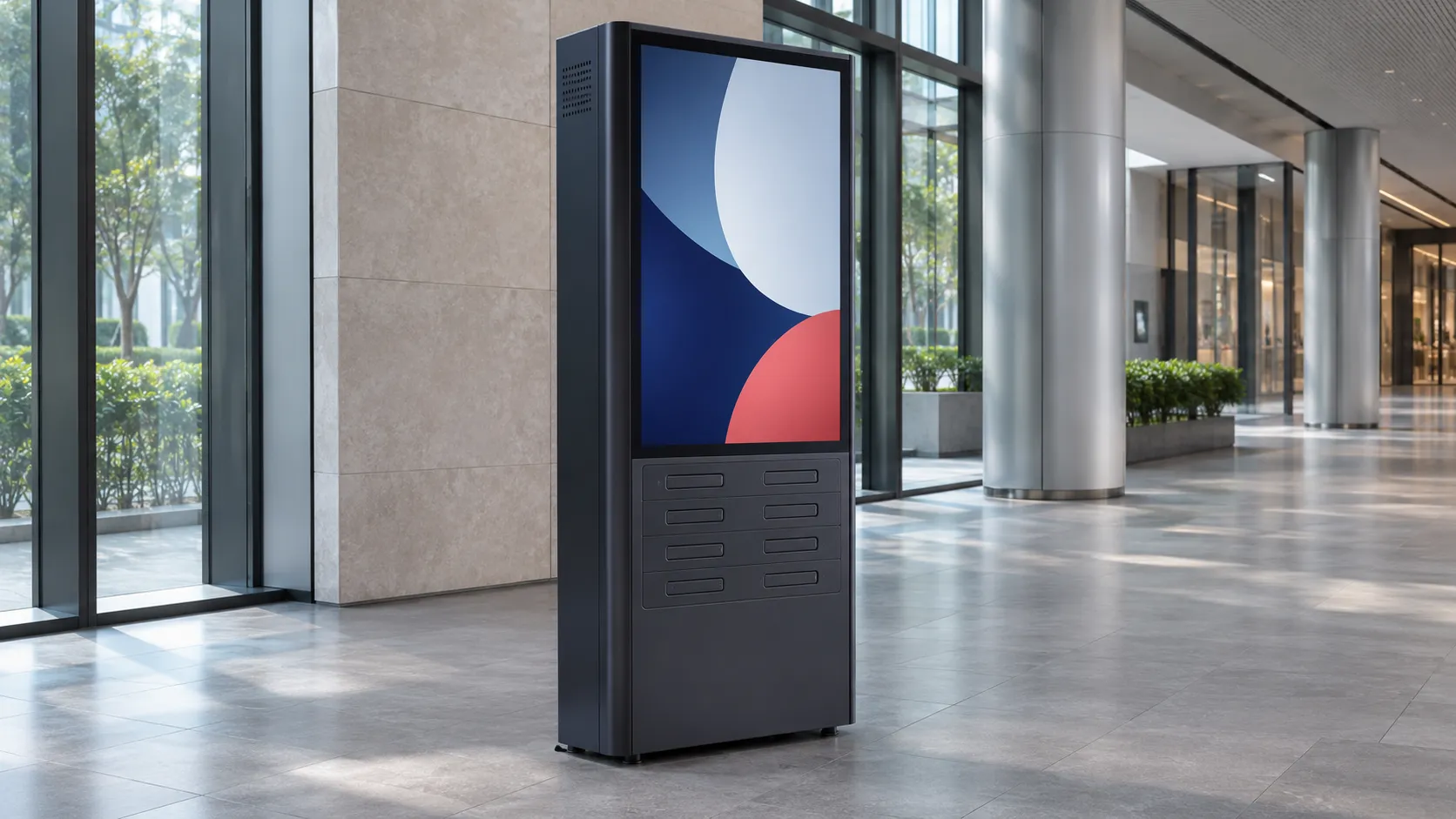
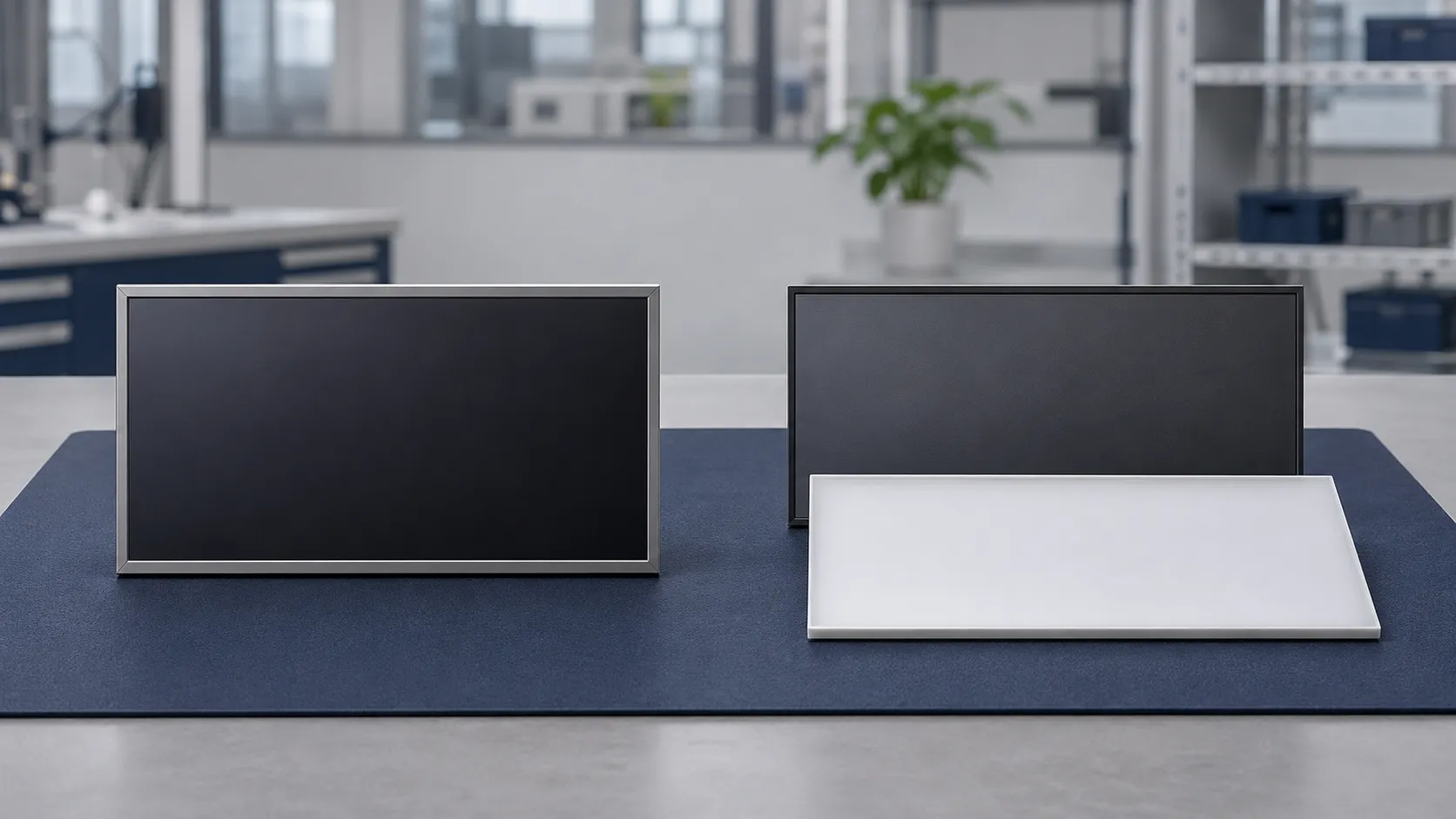
The procurement boundary matters because the base display and the assembled display are different objects. An open-cell offer and a backlit-assembly offer require different integration work. Define the included parts explicitly; a product name alone is insufficient evidence of the backlight, driver, frame or cables you will receive.
An OEM backlit module is also different from a third-party assembly built around an OEM display. The base display’s brand does not establish who manufactured the finished assembly or validate its optical and mechanical specifications. Where a supplier identifies the assembly by a panel model plus a brightness configuration, the quotation still needs a configuration identifier and controlled drawing.
For a buyer with an established display integration design, a component-level offer may fit the existing process. A kiosk builder seeking a more integrated component should define the backlit assembly and its acceptance evidence. In either route, assign responsibilities before comparing quotations; otherwise the apparent price difference may simply reflect different delivery scopes.
| Responsibility | Buyer / kiosk integrator | Evidence to obtain from the quoted supplier |
|---|---|---|
| Mechanical fit | Define opening, mounting datums, depth and access constraints. | A controlled drawing for the actual component or assembly. |
| Electrical interface | Identify the mainboard, signal interface and power limits. | Connector and pin definition, timing, cabling and driver scope. |
| Optical acceptance | Set brightness, uniformity and viewing requirements for the installation. | A report tied to the assembled sample and agreed test conditions. |
| System validation | Approve operation in the intended enclosure and orientation. | An identifiable sample and the configuration represented by it. |
| Purchasing control | Approve the configuration and change-acceptance process. | Revision identification and written notification of relevant changes. |
Turn the brightness target into an acceptance requirement
A requested brightness is a design input. A supplier’s customization range describes a proposed capability. A measured sample result is evidence about a particular configuration under particular conditions. Keeping these separate prevents a target in an inquiry from becoming an assumed production specification.
The measurement must identify the object being tested. Backlight-component luminance is not the finished display’s luminance. For a backlit display sample, agree whether acceptance uses center luminance or an area average, and define uniformity separately. Record the drive settings, ambient conditions, warm-up time, instrument and measurement positions so that results can be compared on the same basis.
Bring the enclosure into the decision as well. The charging system and display share a power and thermal budget. Evaluate the proposed brightness setting in the intended cabinet rather than assuming that a bench result establishes acceptable enclosed operation. The quotation should identify which configuration and acceptance criteria it covers.
Portrait layout and controller fit belong in the same review
When the advertising face is mounted vertically, the installed orientation changes the relationship between the viewer, the image, the connector and the service opening. Assess the content and viewing positions in that orientation. A general wide-viewing-angle description does not establish the readability of the finished kiosk at every approach angle.
The interface needs an equally specific review. A shared interface name does not prove that connector pinout, channel mapping, timing or power sequencing matches the mainboard. Keep the display drawing, electrical definition and controller information together, and evaluate the proposed sample as a system before committing the cabinet tooling.
Keep the approved sample connected to future orders
An approved sample is useful only when later deliveries can be identified against it. Record the display identity, backlight and driver configuration, drawing revision, accepted optical results and agreed change-notification process. A familiar model number alone cannot establish that those details are unchanged. For that next decision, use the LCD revision-change revalidation guide.
For a cabinet program expected to need repeat orders or service spares, ask how discontinuation information will be communicated. If a lifecycle notice arises, the LCD end-of-life sourcing guide covers the separate decision between a last-time buy, candidate qualification and redesign. This is a purchasing contingency, not a statement about the current lifecycle or availability of either size.
Give the RFQ enough detail to produce comparable offers
Once the size direction and delivery scope are clear, request a configuration-specific quotation. Use the following inputs to compare offers on the same basis, even while the final model remains open.
- Cabinet opening, maximum assembly depth, mounting drawing and service clearance.
- Preferred 21.5-inch or 32-inch direction, installed orientation, viewing positions and representative content.
- Required resolution, brightness target, uniformity limits and acceptance conditions.
- Mainboard interface, connector and pin definition, power limits and intended driver arrangement.
- Requested component or assembly scope, sample plan, quantity, destination market and documentation requirements.
Vernon can support requirement clarification, sourcing communication and supplier coordination. Send the enclosure and display requirements for an initial sourcing discussion; the specific configuration, evidence and commercial terms still need to be established for the project.
FAQ: Shared Power Bank Kiosk Displays
Is 32-inch always the better advertising display?
No. A 32-inch direction offers a larger canvas, but the complete assembly must fit the cabinet and the content must work at the intended viewing distance. Evaluate a 21.5-inch option where footprint and close viewing matter; compare representative content before selecting either size.
Does an OEM panel number identify the complete backlit assembly?
No. It identifies the referenced display, while a third-party backlit assembly needs its own configuration record, included-parts definition and drawing. The base display’s brand does not establish the finished assembly’s manufacturer or performance.
Is a supplier brightness range the same as a measured result?
No. A customization range or target does not establish the luminance of the quoted unit. Request evidence for the actual assembled sample under agreed drive, ambient, warm-up and measurement conditions, with uniformity assessed separately.
Can the same interface name establish a system match?
No. Compare connector pinout, data mapping, timing, power sequencing and the relevant driver arrangement with the mainboard. Evaluate the proposed sample in the intended system before accepting the configuration.
About Vernon
Vernon is a trading company and China sourcing partner supporting overseas B2B display buyers with requirement clarification, sourcing communication, and supplier coordination.

About the Author
Saiva
General Manager, Vernon
Saiva is the General Manager of Vernon, a trading company and China sourcing partner supporting overseas B2B display buyers. She supports requirement clarification, supplier coordination, and sourcing communication for LCD display projects.
Discuss Your Kiosk Display Requirement
Send your cabinet drawing, preferred size, interface, brightness target, supply scope and quantity. Ask Vernon to help clarify the requirement and coordinate the sourcing questions for your project.